Hrvatski
Article available only in Croatian.
organizational project “Digital education”



Adriatic Aerospace Association
Association of research institutions and high technology firms.
Article available only in Croatian.
This article is available only in Croatian.
Slovenci su najveći svemirci u regiji kojoj su zvijezde nedostižne | Bloomberg Adria
Dear Madams and Sirs,
At the beginning of this decade, the US and China embrace exploration boldly for a sustained robotic and human presence in the Solar system. The early space race was a sprint, especially for the first Moon walk, but the new race will be long lasting and into deeper space, especially for Mars. Besides medium players such as Russia and India, non-traditional space-faring countries like UAE or Saudi Arabia are now also engaging in space exploration programmes. Under such geostrategic circumstances a European standstill is not an option.
We are at the dawn of a low Earth orbit economy, expanding to the Moon and later to Mars. Europe must shape its own future and not just passively witness others exploring beyond Earth, establishing their economic influence, and reaping the benefits. The European space industry strongly holds that Europe cannot afford to be sidelined, considering its GDP and international ambition. Skilled jobs creation and technological innovation with spillovers well beyond space technology are at stake.
But there is much more. With an accelerated pace of space activities around the globe, we want to alert politicians that it is their decision now for Europe to have its own sovereign capabilities or to be a follower forever and miss out market shares and future prosperity.
The European industry can undoubtedly deliver. Europe’s strength is unique multilateralism, creativity and diversity, federation of resources and know-how for common goals. The thrill of the first ever asteroid landing (Rosetta mission) and recently Ariane 5’s perfect launch of the James Webb Space Telescope are outstanding proofs of competence. The same has to hold true for exploration.
Cooperation on the International Space Station, on Orion and soon the lunar Gateway and Mars sample return, all led by the US with significant European contribution, has already strengthened European industry resulting in some instances in worldwide market advantage like the on-going B2B initiatives well established with US and other industries.
In this new era of expansion, we as space industry, have to strive for more autonomy in a level playing field. We are ready to move on to the next step and embrace new innovative business models, such as service-based commercial initiatives. Like in the US, governmental support and commitment as anchor customer is vital, as well as setting clear rules for co-funding and derisking technology maturation. We also foresee that numerous non-space industrial sectors such as energy, automotive, health, food, etc. will be profiting from opportunities created by a large variety of exploration challenges in order to tackle immediate grand challenges including energy and climate, circular economy and sustainability.
This open letter is therefore a plea for decision-makers to step up at the occasion of the ESA Council at ministerial level in November this year. Courageous and bold decisions are needed to unlock the potential of industrial growth by supporting fully the Terrae Novae programme proposal and its 2030+ strategy roadmap. Failing to open the door for the next decades will see Europe’s heritage of explorers vanish, and so will the pride of the young Europeans bound to watch others making history, leaving the dream to the ones who dare, taking away the emotions of being part of this endeavour and putting their inspiration in a straitjacket.
Space exploration is not a nice to have, it is also more than pride and soft power, it is a civilisation necessity.
Sincerely,
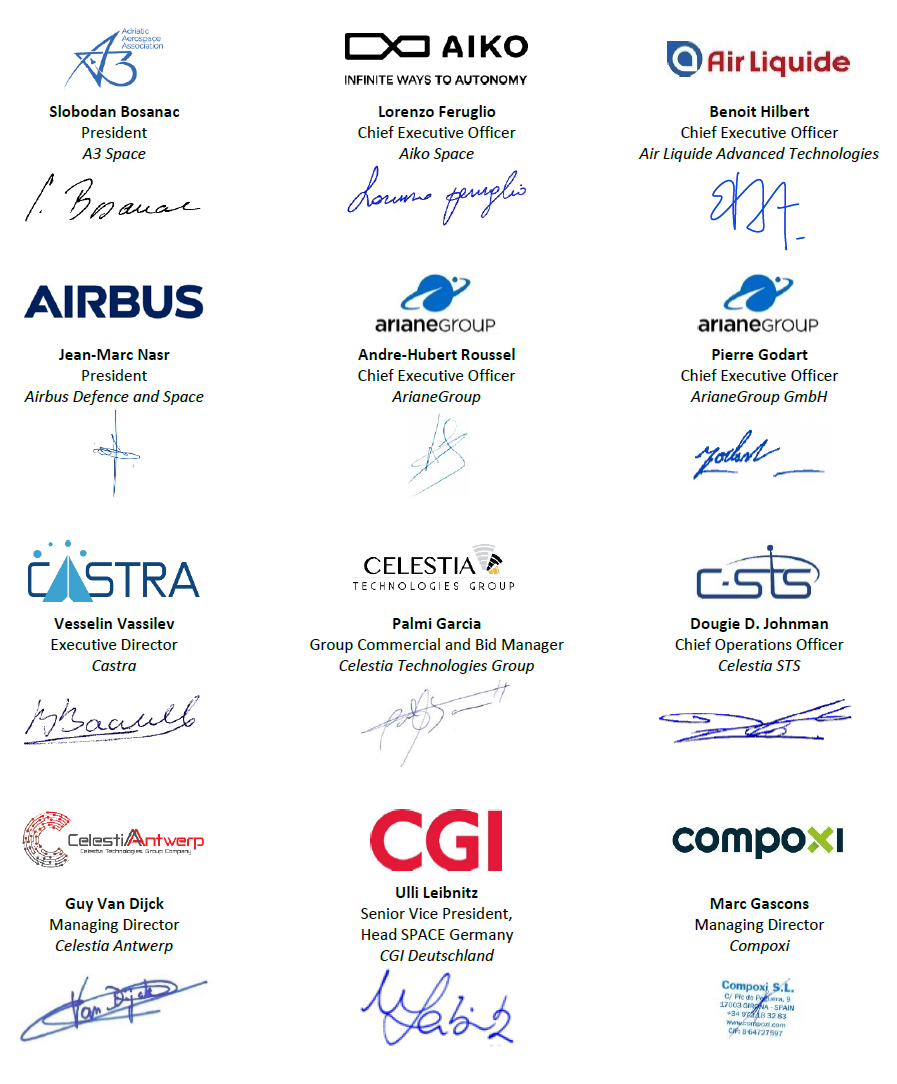
For Adriatic Aerospace Association
Slobodan Danko Bosanac, president
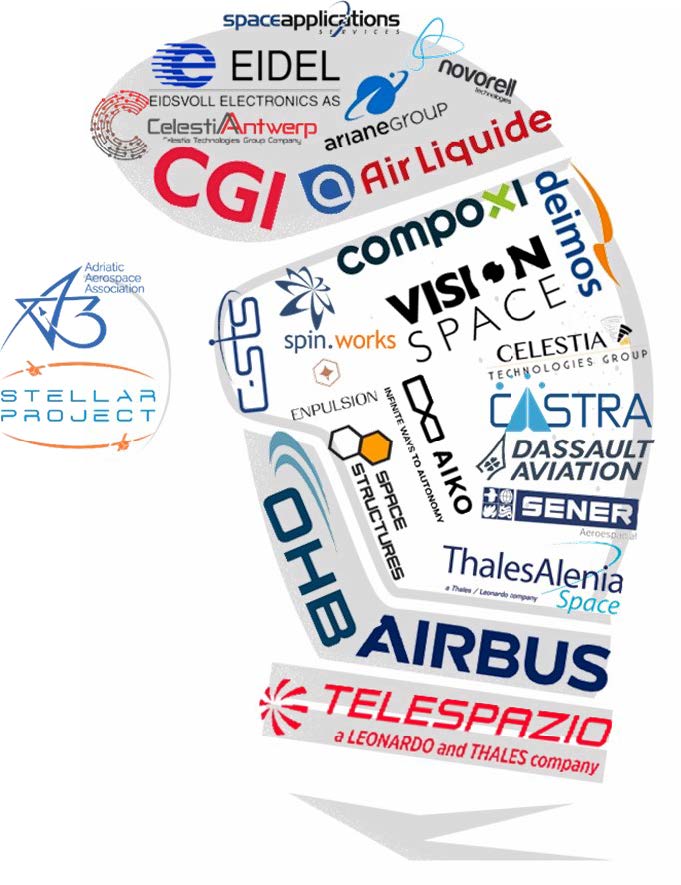
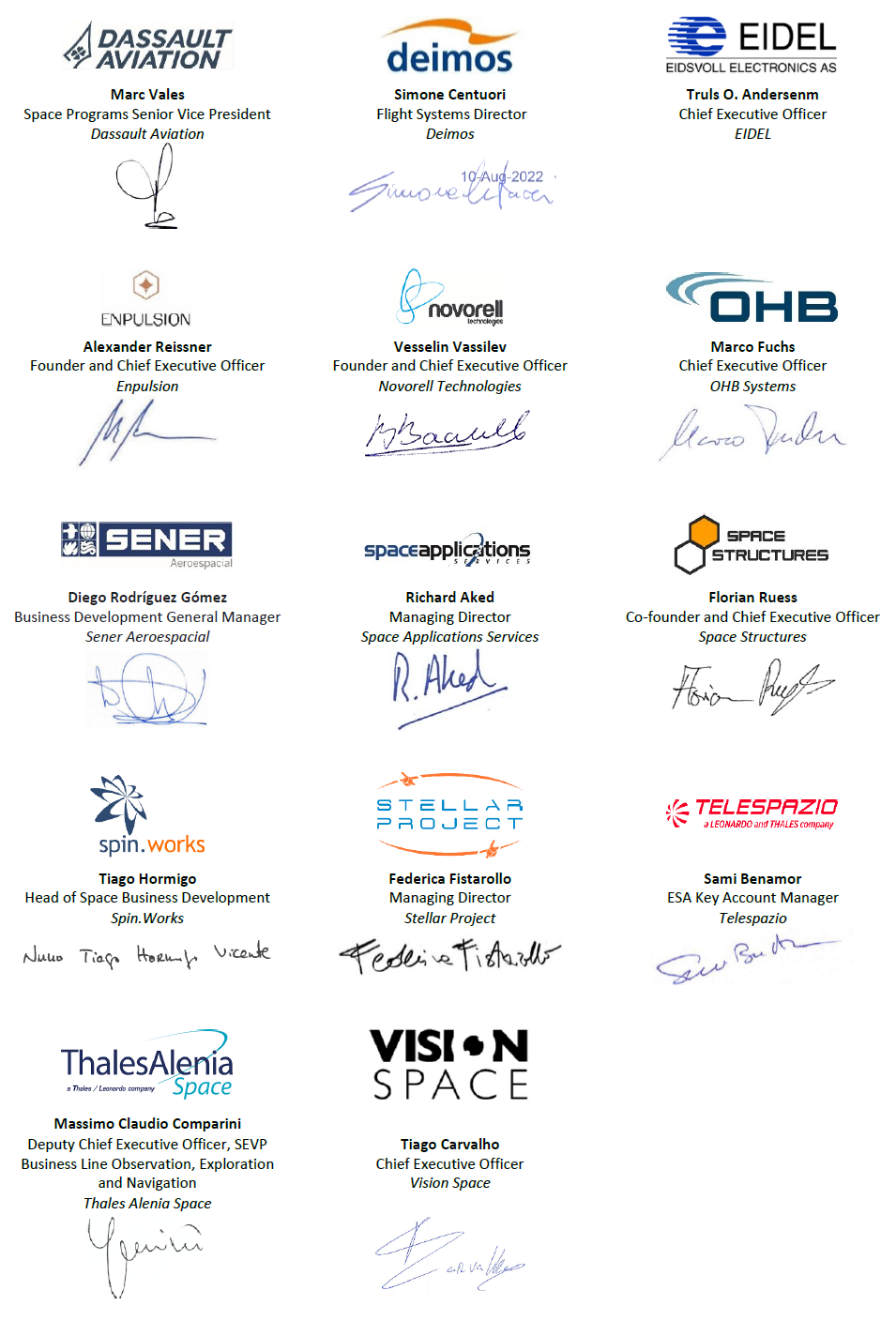
Signatories of the letter:

Welcome to the EuropeanAI Newsletter covering the European AI and technology ecosystem. If you want to catch up on the archives, they’re available here.
The European Commission set up a virtual space for interested parties to engage with and shape the EU and US discussions in the Trade and Technology Council together. In this newsletter, we cover the potential interaction between the proposed regulation on foreign subsidies and agreements within the Trade and Technology Council’s work streams.
The European Commission is also running a tender in correlation to the Digital Services Act and the Digital Markets Act for which it is commissioning a foresight process related to these regulatory interventions for online platforms.
Other key topics to keep an eye on are AI regulatory sandboxes, as defined in the AI Act. They are currently being discussed in the European Parliament, both in light of their interaction with general purpose AI systems, with an eye towards increasing legal certainty and fostering innovation. We’ve previously covered AI sandboxes and testing environments in this newsletter.
The Council of the European Union and the European Parliament reached a provisional political agreement on the regulation on foreign subsidies distorting the internal market. The agreement paves the way to the adoption of the regulation into effective law, which is subject to final approvals by the Council and the European Parliament.
What is it?
The regulation institutes a regime for oversight of state subsidized investments and economic activities of companies in the EU. These state subsidies may take various forms, such as grants, loans, capital injections, tax incentives, or exclusive rights. All companies operating within the Single Market are captured by this proposal, whether they are state-owned and private, based inside or outside of the EU.
The aim is to screen for and preempt the direct distortative or spillover effects of state aid to those companies, instigated by non-EU countries.
Under the proposed regulation on foreign subsidies, companies must notify the European Commission of planned mergers and public procurement bids prior to their implementation should they be above certain thresholds. The Commission reviews the mergers/bids, assesses the existence of foreign state aid and whether it distorts competition.
It may also investigate mergers and bids of lower values, as well as any other economic operations in the EU on its own initiative. Companies, interested parties and EU member states may inform the Commission of suspected distortive foreign aid.
Analysis: Why is it AI-relevant?
According to Eurostat, the US is the largest foreign investment partner to the EU in terms of both stocks and flows. In terms of stocks (i.e. positions), the US accounts for the largest share (~30%) of the foreign direct investment in the EU in 2020 (the latest, for which public statistics is available). In terms of direct investment flows, the US ranks first among the other EU partners, with more than EUR 250 billion of investments. The US was also the largest importer in the EU of goods and services. These data points appear to suggest investment and trade intensity that exposes the US the most to any EU measures targeting foreign aid.
The proposed EU regulation on foreign subsidies includes critical infrastructure and innovative technologies, such as semiconductors and AI, and comes at a time when the EU and the US are attempting to strengthen their cooperation and facilitate investments in trade and technology through the EU-US Trade and Technology Council (TTC; read more here). A key area of overlap between those two efforts will likely be the TTC’s focus on investments in semiconductor manufacturing facilities.
In a joint statement earlier this year, the EU and the US have committed to avoiding “subsidy races” in the sector. Language in the statement suggests that the two parties are aware of subsidization effects of their schemes for promoting home-grown chip manufacturing through the EU Chips Act and the US “CHIPS for America Act” (e.g. Intel’s new factories under construction in Magdeburg, Germany and in Ohio, the US, and Taiwan Semiconductor Manufacturing Co Ltd’s new plant in Arizona).
In order to navigate potential trade tensions, the EU and the US have committed to cooperating on subsidies to chip manufacturing via the World Trade Organization (WTO). However, the EU’s proposed foreign subsidies regulation will operate in parallel to the WTO’s subsidies controls and the TTC’s cooperation arrangements. It appears to serve as a safety vault for the EU in case foreign industrial policies change in unexpected ways. For example, fluctuations in demand or state measures could possibly affect projected policy outcomes and economic fundamentals of a sector (e.g. by resulting in overcapacities, “killer” acquisitions). Which, in turn, may have distortive effects on the EU market (e.g. lessened competition).
Notes in the Margins: The EU’s proposed regulation on foreign subsidies complements its existing framework for screening foreign direct investments (previously covered in this early edition of the newsletter). The former monitors and intervenes with foreign firms’ investment activities on grounds of their potential distortive effects on competition in the Single Market. The latter monitors and could preempt investments in certain sectors on grounds of security and public order. For example, sectors such as defense, energy, other critical infrastructure, critical technologies (such as semiconductors and AI).
The European Parliament’s Panel for the Future of Science and Technology (STOA) published a study on auditing the quality of datasets used in algorithmic decision-making systems (more specifically, in machine-learning applications). The study examines different types of bias, their causes, associated technical and legal complexities, and approaches to mitigating bias.
It puts forward a range of policy options, the most interesting of these are: (i) application and appropriate interpretation of existing and proposed draft legislation (e.g. non-discrimination laws, the General Data Protection Regulation, the Digital Services Act and the Digital Markets Act, the Data Governance Act, the Data Act, and the AI Act) – instead of adoption of new specific rules — in order to tackle bias; and, (ii) introducing requirements and schemes for standardization and certification of datasets to be used in AI systems.
Enjoy learning about Europe? Share the subscription link with friends, colleagues, enemies…
Contact Charlotte Stix at:
www.charlottestix.com
@charlotte_stix
Dessislava Fessenko provided research and editorial support.
Interesting events, numbers or policy developments that should be included? Send an email!
Disclaimer: this newsletter is personal opinion only and does not represent the opinion of any organisation.
Copyright © Charlotte Stix, All rights reserved.
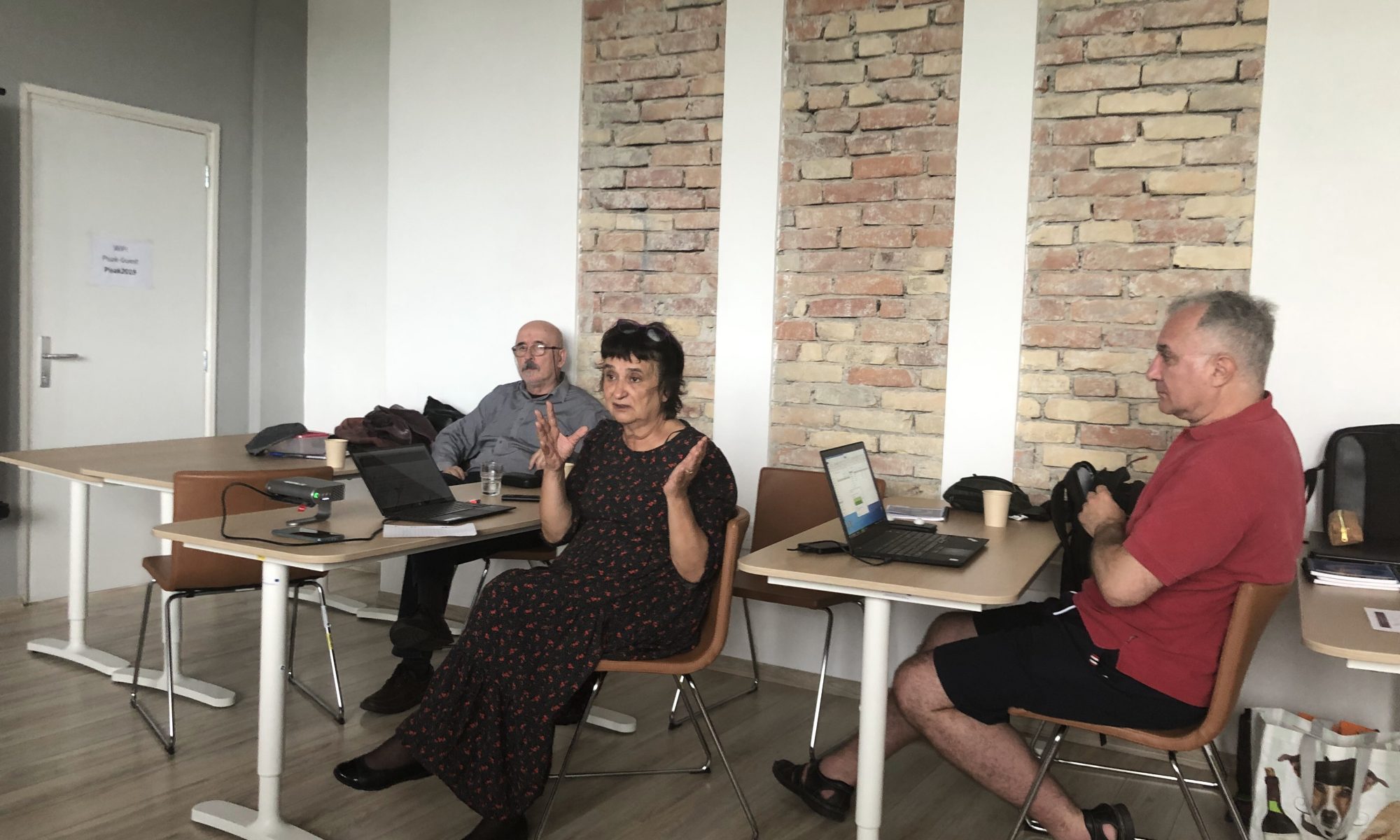

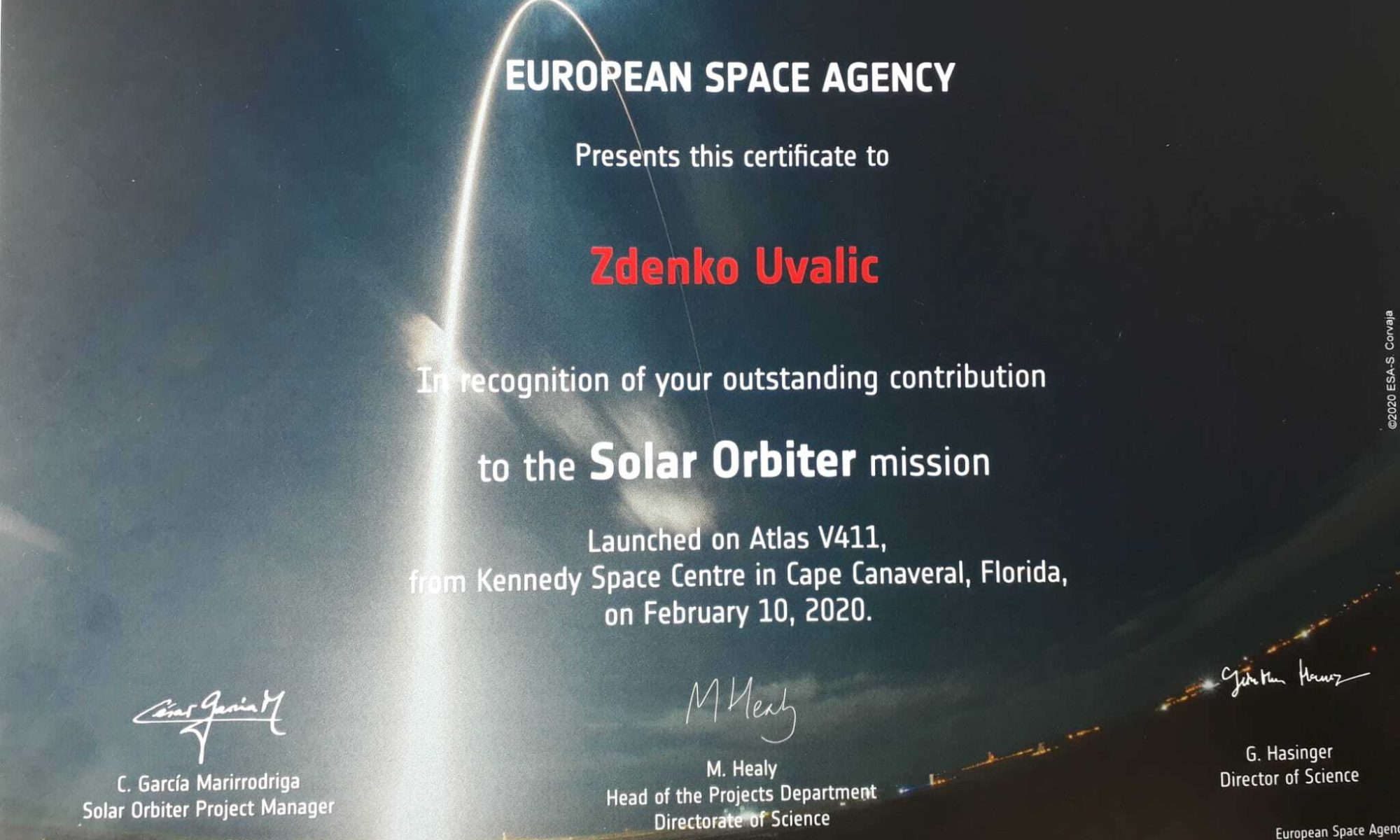
We are proud having you as a member of our Association!
This article is available only in Croatian.

Organized by the Adriatic Space Association and co-organized by the Ruđer Bošković Institute, University of Zadar, Faculty of Science, University of Zagreb and the University of Algebra, at the Ruđer Bošković Institute, and under the auspices of the Croatian Academy of Engineering, held the conference Artificial Intelligence follows the trends in the development of artificial intelligence in space, where top experts from Croatia and Europe spoke. Also, the sponsors of the conference were the Zagreb Tourist Board, the University of Zadar and Visage Technologies.
The Adriatic aerospace association is an association of individuals from top experts to students, companies, and scientific institutions, directly or indirectly linked to space science and technology. The activities of the A3 Association extend in several directions, and one of the main ones is international cooperation, especially regional. This conference was just aimed at this type of cooperation, to bring together experts, companies and scientific institutions on a topic related to space technology and space development.
Conferences are held every year, and for the past two years the same has not been feasible due to restrictions on holding gatherings caused by the current pandemic. The last one was held in 2019. The purpose of the conference is to see in which parts of advanced space technology can agree on cooperation in this region, especially in Croatia.

This year’s theme of the conference was Artificial Intelligence in Space, a topic of priority for the development of the European Space Agency (ESA) and the European Space Commission. Exploring space and man’s going into space is unthinkable without an artificial intelligence partnership, as such an endeavour is an extremely demanding job and an expensive project. Probes that carry robots with the application of artificial intelligence, can largely perform tasks that should be performed by man, but the process is much simpler and more efficient. When one day the launch of humans into space becomes a standard project, artificial intelligence, either in the form of robots or in the form of androids, will be a partner for humans to stay and explore space.

The conference was attended by top experts working on the development of space technology and those who are indirectly involved in such a development.
The first speaker (presentation) was Dr. sc. Riccardo Duca from the European Space Agency, responsible for the technological development of ESA, who spoke about the projects being carried out within the framework of artificial intelligence in ESA. There are approximately 200 current projects related to artificial intelligence, so half of these projects relate to the analysis of data obtained from space probes, space objects, or satellites that send data from space to Earth. This is a huge amount of data that would be difficult to analyze without the existence of artificial intelligence, and thus extract the important ones.

The second half of the project is related to the development of artificial intelligence, which is placed on space probes, which then control space probes, or objects that are sent to space bodies in space, such as the Moon and Mars, and even asteroids. A typical example is the navigation system of the BepiColombo probe – a probe that needs to leave Earth and orbit the planet Mercury. Extremely demanding project, which would be difficult to achieve without artificial intelligence.
The second lecturer was prof.dr.sc. Bojan Jerbić from the Faculty of Mechanical Engineering and Naval Architecture, University of Zagreb, who is the holder of the robotic intelligence project and the head of the Centre for Advanced Artificial Intelligence – CRTA. He spoke about the neuronavigation project and the possibilities of robots to independently perform operations on the brain and other parts of the human body. Although the project is medically oriented, it is very important for the future development of the space presence in space. Such a robot can largely replace the need for traditional medical participation in surgeries. On Mars, a single robot could very well be used for future operations, without the need for medical staff.

Next, the third presentation (presentation) was given by dr.sc. Alexander Radovan from the University of Algebra, who had a presentation on the development of artificial intelligence on the Mars rover and the development of artificial intelligence for probes on Mars. In the presentation, the lecturer Radovan gave a historical overview of the development and continued the lecture in the direction of the latest development of the rover; of its possibilities, how it makes decisions, in which direction to explore the surface of Mars and how to avoid awkward situations.

The fourth presentation (presentation) was given by mr. sc. Luka Orsag on behalf of Visage Technologies, which is also a member of the Adriatic aerospace association. He spoke about the visual communication of man and robot based on visual collaboration. By visually exchanging information between a human and a robot, it is possible to interpret information from the context of such communication, from the expression of a human face.

The fifth lecture (presentation) was given by prof.dr.sc. Philipp Berglez, from the Faculty of Geology, Technical University of Graz, who spoke about navigation based on data obtained from satellites. Today’s navigation uses GPS, but for special needs it is required to be highly accurate. In other words, it is necessary to analyse an extremely large amount of data that ordinary GPS, which is used in everyday use, cannot process. For such a large amount of data, precise navigation on the ground requires artificial intelligence. In the future, if self-driving cars are to be planned, they will need just such a high-precision navigation and they will have artificial intelligence with them to interpret this data.

Jorge Ocón, Head of the Department of Autonomy in the Department of Space Robotics at GMV, then spoke as the sixth speaker. The topic of the presentation was the application of artificial intelligence for autonomous robots with examples used on earth. They are planned to be used to explore mines, inaccessible areas, pollution, radioactivity, etc., which can very easily be used to explore “enemy areas” such as the Moon or Mars.
Prof.dr.sc. Tomislav Stipančić from the Faculty of Mechanical Engineering and Naval Architecture, University of Zagreb, as the seventh exhibitor, spoke about the visual interaction of man and the image of a robot that perceives human facial expressions and interprets various emotions such as laughter, anger, joy, sadness, dissatisfaction, etc., showing examples interactive visual communication with the robot. Based on such an expression, the robot, i.e., the embedded software of artificial intelligence, can conclude the state of emotions of its partner.

This is extremely important, because one day in space, humans will surely be partnering with an android and a human-like robot that will be able to read conclusions about emotional state and current mood based on the expression of a human face.
Daniela Jović, as a member of A3, but also an employee of the Slovak company Spacemanic, as the eighth lecturer (presentation), gave a historical overview of the development of space technology and space science in Slovakia from the early 60-70 years, the results achieved and especially the current success of Spacemanic development of satellite technology. She also announced the A3 project, which together with the company Spacemanic is building the first Croatian satellite that should be launched in 2023. The satellite is called CroCube and measures 10 x 10 x 10 cm.

Filip Novoselnik from Protostar Labs spoke as the ninth speaker on the development and programming of artificial intelligence for industrial robots, which can be easily used in space conditions, such as work on space stations or work on space bodies such as Mars and the Moon.

At the end of the presentations (presentation), Ph.D. Jörgen Ahlberg, owner of Visage Technologies from Sweden, spoke about a very important topic, and that is how start-ups, ie business start-ups, can succeed in the market world of competition. It was extremely interesting to see that failure to set up and run such small businesses does not have to be an obstacle to not starting and developing new ideas to start such ones, ultimately with the success of companies like Visage Technologies, where they manage to find projects that companies process. and have success in the world rankings.

The conference concluded with a panel discussion on the role of SMEs in the development and organization of artificial intelligence for space exploration. The discussion was extremely interesting, and the aspects of how small companies would have an advantage in the development of basic ideas of artificial intelligence in contrast to large companies were considered. Small companies have the flexibility that ideas can be launched immediately, while large companies must go through administrative steps in order for such a project to be launched.

As part of the conference, “Night under the Stars” was organized, also at the Ruđer Bošković Institute, which was in the evening, and began with a lecture by Ante Radonić on the James Webb telescope. The lecture attracted many people, especially younger ones, and Ante Radonić presented the historical development of space telescopes in space. The final project resulted in the James Webb Telescope, which surpassed all previous telescopes in technology, but which still provides extremely important data. With its precision, James Webb replaces special areas of the electromagnetic spectrum, which complements previous telescopes.

In the evening, three telescopes of the Zagreb Observatory, the astronomical society “Beskraj” and one telescope of amateur astronomers were set up on the meadow of the Ruđer Bošković Institute, where the citizens of the City of Zagreb could watch the night starry sky. Fortunately, the sky was extremely clear so that very distant objects could be seen nicely.

The event attracted many citizens, but what makes us happy is the presence of many children and young people who had the opportunity not only to see the night sky, but also to find out what these facilities represent. It is people from astronomical societies who are top experts in astronomy and have been able to transfer a large amount of information to the public.
The second day of the conference was organized in the form of a visit to the Center for Advanced Robotic Technology – CRTA, at the Faculty of Mechanical Engineering and Naval Architecture, University of Zagreb, with prof.dr.sc. Bojan Jerbić. On the spot you can see what all kinds of robotic technology exist and are developing in this Centre, which left a great impression on the conference participants.


 The basic dilemma in the planning of conquering Space is whether it is a human endeavour, or we let the job be done by artificial intelligence, more precisely androids. In both cases without artificial intelligence the plan is bound to fail, whether it is building and partnership in space stations or habitats on the Moon or Mars. At the root of this dilemma there are many challenges to be tackled if humans are the passengers in Space, whereas for artificial intelligence they are not much more problematic than for ordinary machines. Adriatic Aerospace Association, together with its partners, is organising a meeting to review the challenges of developing artificial intelligence that would work in partnership with humans, or that would be sufficiently autonomous in decision making and curiosity driven as humans are.
The aim of the conference is to foster and strengthen regional cooperation in research and development of these activities. The conference profile is a two-day meeting with plenary lectures by eminent speakers. The state-of-the-art in the field and future developments are the focus of the meeting, whereby groups from regional countries will participate and share their knowhow. The invited lectures will be followed by a panel discussion on the issue of the role of artificial intelligence in Space.