Hrvatski
“Within the Regional Competence Center of the Technical School Sisak, a practicum for space technology is planned, which will be equipped with the necessary equipment for the preparation of small satellites for launch. In the world, by the way, the preparation of small satellites according to the given protocol and with special licensed equipment is done by employees in the rank of technicians, so the development of a high school curriculum in that sense (technician for small satellites) is also planned. Thus, the student will be able to acquire sufficient competencies at the Technical School Sisak to be able to assemble a small satellite according to the technical documentation, perform all necessary tests and prepare a small satellite for launch. “- says prof. Stevce Arsoski from the Technical School Sisak.
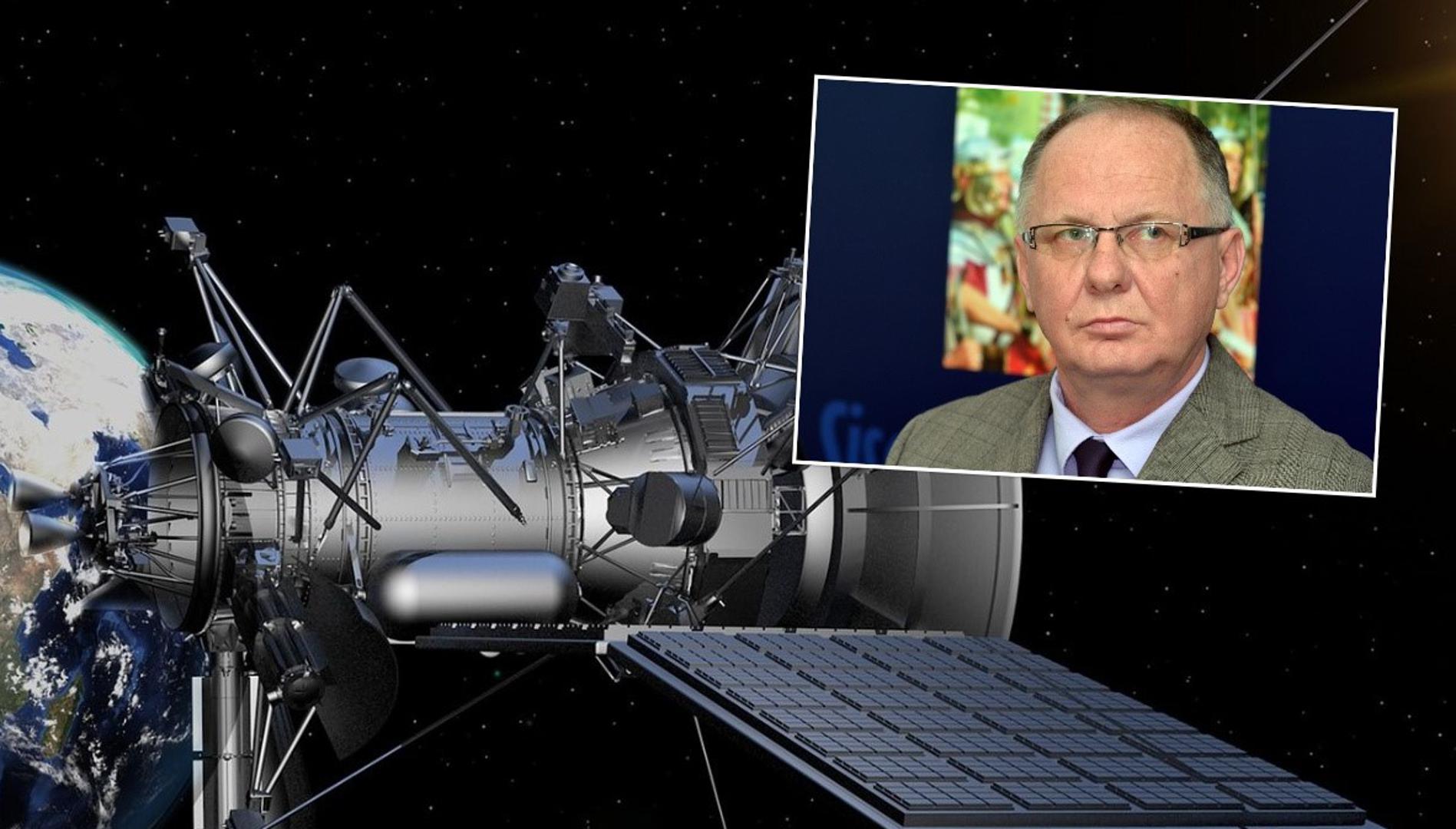
What Professor Arsoski told us may seem a bit, in Croatian terms, as a distant future, given the problems of the Croatian school system, but the Sisak Technical School has been successfully overcoming these systemic obstacles for years.
Namely, back in 2006, several professors of the Technical School in Sisak started the first research in the field of ion propulsion. Then these professors with a team of three students made an ion hovercraft which was also successfully tested after four months of operation and presented to the world as the 356th successful such experiment.
After that, the few professors of the Sisak Technical School were the first to imagine that their students would make solar-powered cars for them. So they achieved that. So in Sisak, for ten years now, the SOELA Solar Car Race has been taking place in June, in which about 20 Croatian high schools and faculties are already participating, with guests from European countries that do not have such races. Every year, more and more Croatian high schools and faculties make solar-powered cars just for this race.
Again, the same team from the Technical School Sisak, reinforced by external associates and with the support of the Development Agency SIMORA, a year ago launched a mega-popular high school course for technicians for video game development, which opened this year in Novska. Here, boys and girls learn to make video games, and in addition to the Technical School, they also have all the necessary support in the Business Incubator for the development of video games PISMO in Novska. Games are already taking place there, and SIMORA and the City of Novska are now preparing to welcome these students in Novska and the faculty, which provides a five-year program with 50 students per year in programming and graphics, and around which cooperation has already been established with colleges from Malaysia and New York. The future campus will also have a large arena for e-sports, the only one of its kind in Croatia.
So far, the Sisak Technical School has withdrawn more than two million euros from European funds. For its next major project that will generate new curricula and new high school courses, the Regional Center of Competence for Mechanical Engineering and Electrical Engineering, Technical School Sisak received a little less than 80 million kuna from European funds. It will be located in the former Home Guard barracks in Sisak, a protected cultural monument, and another million euros are expected for this project …
Therefore, it is quite logical that now is the time to go from the Technical School, Sisak and Sisak-Moslavina County into space with knowledge.
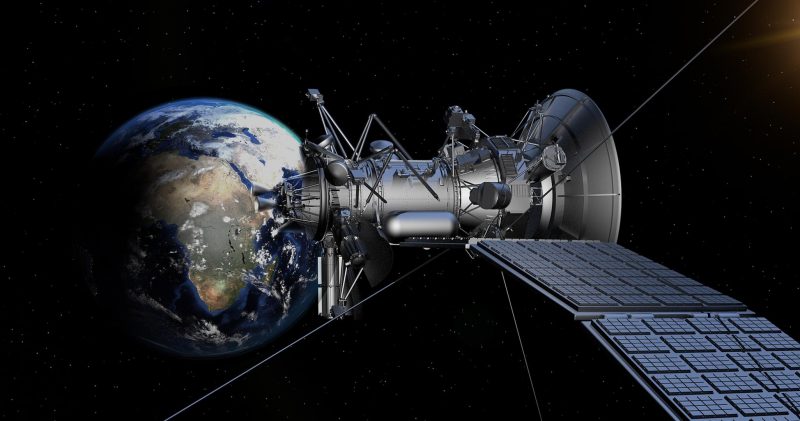
“Within the practicum and the Regional Competence Center, quality teacher education is planned, procurement of six small satellites in the whale (CUBEsat), one of which will be launched into medium orbit, and the others will be used for teacher education and later students. Education and assembly of small satellites, as well as the launch will be performed by professional teams that are already doing it successfully and have extensive experience. “- adds prof. Stevce Arsoski.
And the recently established Center for Space and Innovative Technology will help them there. It is an institution for the establishment of which the County Assembly made a decision in May last year, and which was then ridiculed by the public, but it was defended by experts involved in its establishment. As usual with the administration, the Commercial Court completed the registration process of the institution only in June 2020.
“The Center for Space and Innovative Technology is part of the application of the Regional Competence Center, which is starting to be implemented in the area of the former Home Guard Barracks in Sisak. Part of the total space of almost 10,000 m2 is also reserved for the area of space and innovative technologies. Until then, in accordance with the signed contracts, the Center uses the premises and equipment of the Faculty of Metallurgy, University of Zagreb and Sisak Technical School, and plans to sign contracts with other entities that have given letters of support for the establishment of the Center. Some of the projects were applied for by the Center’s partners, and funds related to space and innovative technologies were received in the amount of HRK 3 million. ”- says Darjan Vlahov, County Head of Education and Sports and Interim Director of the Center.
Sisak-Moslavina County did not come up with the idea of starting such an institution on its own, but it is the result of cooperation with interested companies, institutions, associations and individuals, who are also the founders of the Center. The Sisak Technical School is also among them. The first draft of the Centre’s work plan involves collaboration with several interested entrepreneurs on projects needed in their companies, and projects are being developed.
“The team is just being formed and there is a surprising number of people, scientists, heads of centers of excellence, institutes, faculties and the like, who have applied in the last year and are waiting for the start of the Center to return their knowledge, skills and contacts through the Center.” county and state. “- adds Vlahov. Among them are Sisak students who built the first ion aircraft in Croatian high schools in 2006. One member of that team has a doctorate in electronics, another graduated from FOI in Varaždin, and the third is a successful entrepreneur.
By the way, ion engines in high schools have been returned in recent years through the establishment of sections for space technology in vocational schools. Again, this role is played by the professor of the Technical School Sisak Stevče Arsoski, who is a member of the professional association 3A (Adria aerospace association). Since in A3 prof. Arsoski in charge of the education department wrote a work plan and learning outcomes for the space technology sections. So far, about 10 such sections have been established in schools throughout Croatia, and it has existed at the Sisak Technical School for 4 years, regardless of that.
“The work program of the section is relatively short and refers to the research of activities in the field of space technology in the world and the production of ion hovercraft and ion engine, which is currently a very interesting satellite drive, but in space conditions. This year, the Sisak Technical School section completed an interesting project “Ion Engine Model” funded by our company INA. The ion engine was supposed to be presented at a large innovation fair in Istanbul or Geneva, but due to the crown it was postponed until further notice, but it is completely finished and we are very satisfied with the work. “- says prof. Arsoski praising the 3A association, which will be among the main supporters of the Center for Space and Innovative Technology.
The association is led by prof.dr.dc Slobodan Danko Bosanac, who also leads the project of the first Croatian satellite “Perun”.
Association 3A is conceived as a gathering place for experts from the space technology sector, and, says Prof. Dr. Bosanac, space activities include various technical professions such as electrical engineering, mechanical engineering, energy, materials, then IT science, physics, chemistry, biology , medicine – and introducing the public to space activities.
“Today, we have directly over 60 members, and indirectly, through the membership of legal entities, far more. We have significant international activities, working on the Perun-I satellite project as well as designing new projects, launching popularization projects and writing a strategy and program of the Republic of Croatia for space development, introducing high-tech companies to space projects and their role in them, but and the benefits of such projects. ”- explains prof. A Bosnian who describes the Adriatic Aerospace Association as a “point of contact” in Croatia for space activities.
“The issue of technology development is crucial for development on a global level, for example the issue of ecology, energy, health. The challenge of the unknown as well as the essential needs of survival are fostered by new ideas, and through it the development of science and technology. The universe has a special place, a challenge to the unknown, stimulating the imagination but also an essential need because humanity needs to gather around big projects to survive. However, it should be emphasized that the development of space-inspired technology has enormous benefits for application on Earth, in everyday life. For example, Teflon, today replaced by new materials, or modern mattresses came from space projects. The exceptions are large states where the original motivation was purely military in nature, but subsequently moved in the same direction precisely to encourage development for terrestrial needs.
Croatia is behind them.
“In our country, the development of space technologies is still encouraged on individual initiatives, but still the awareness of the need to include Croatia in the space program is slowly reaching state bodies. There are contacts with responsible persons and agreement in principle on development directions. The problem is that there is no body that would be independent of changes in government agencies and that would be the holder of the space program. In some countries, these are space agencies, while in many it is a space office that brings together experts and as such has an advisory role to government bodies that decide on the direction of development. Our association proposes a space office without which there is simply no serious development in space technologies and science.
“Long before state-level officials. They made the decision to establish this center, which is still the only institution in Croatia, although it is still in its infancy, but good will exists. The center will bring together young people for the development and commercialization of ideas aimed at space projects, but also especially for applications for civilian purposes. “- adds prof. A Bosnian who says that the step at the state level towards Croatia’s membership in the European Space Agency (ESA) was taken a little earlier, as an indication of Croatia’s commitment to space development. Croatia is an accession member and as such we have to go through the so-called PECS program, which lasts up to 5 years, and which proves the suitability of Croatian potential for participation in the Agency’s program. However, even after more than two years, this fundamental step has not been taken – the Republic of Croatia has not launched the PECS program, which is an indication of the seriousness of the state in space development.
But again, fortunately, we are returning to private initiative. Croatia, as the only member of the European Union, does not have a single satellite in Earth orbit. However, the academic community is actively working on two satellites – FERSAT at the Faculty of Electrical Engineering and Computing and the aforementioned Perun I in Algebra under the auspices of the Adriatic Aerospace Association.
In the coming years, many high school students, technicians for small satellites, will work on this Perun 1, or some future Perun, in Sisak, some of whom will certainly continue their education at universities. Maybe in the end, by then, the Republic of Croatia will be a full member of the European Space Agency, so some of the first engineers from the Republic of Croatia in ESA will be from the Sisak Center for Space and Innovative Technology.
FRAMEWORK
“It must be mentioned here that the development of space technology, especially rocket technology, started quite early in Yugoslavia. The center of development of rocket technology was in BiH, while navigation, communication and electric propulsion systems in Croatia. In 1978, the world’s most important astronautical congress IAC was held in Dubrovnik, which meant that much earlier Yugoslavia was a member of the International Astronautical Federation, the organizer of this congress, since in 1967 the congress was held in Belgrade. The IAF is a world organization whose members are active in space activities, and our association A3 has been a member since 2018 “- said Prof. Dr. Slobodan Danko Bosanac.