Meeting with the ambassador of the Peoples Republic of China

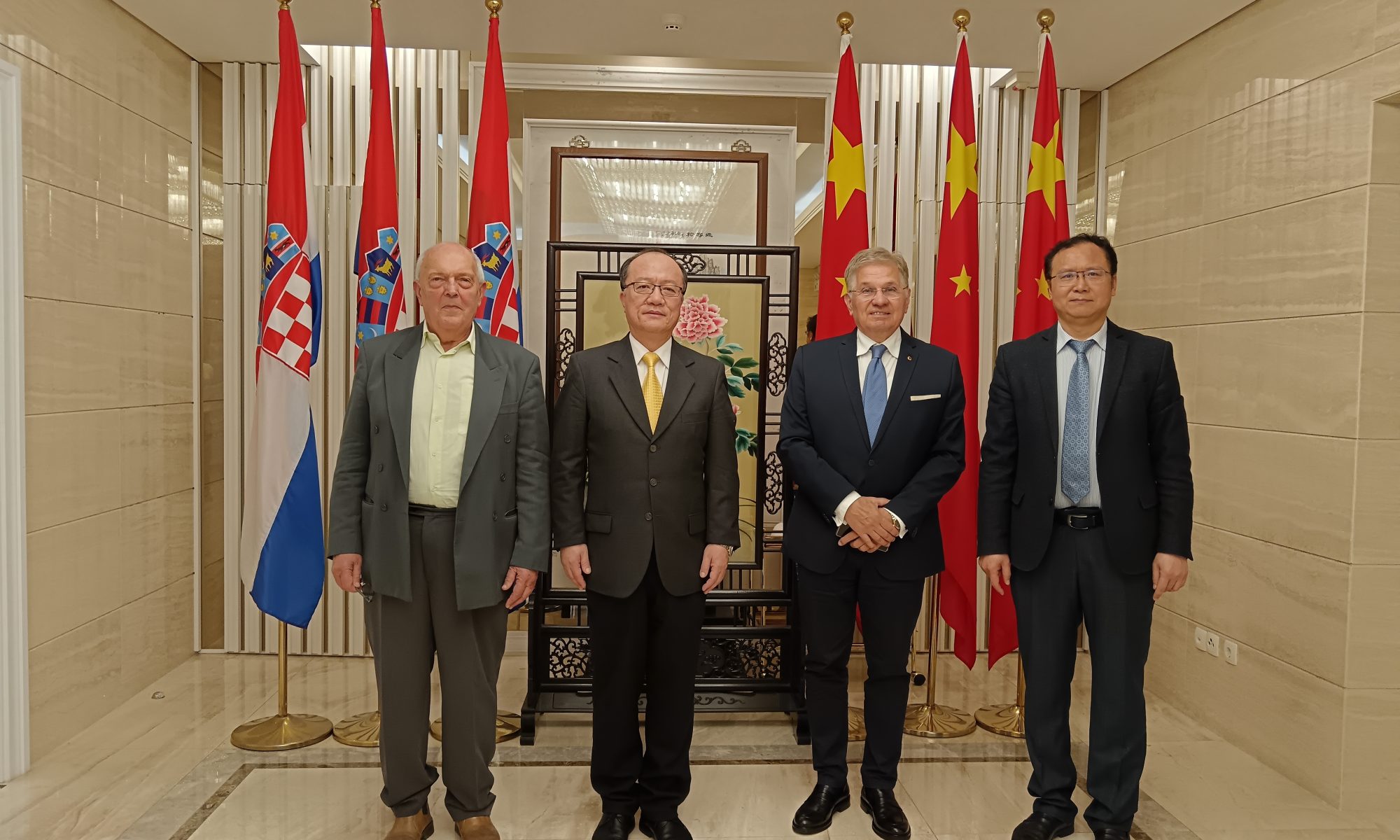
The meeting with the Ambassador of the Peoples Republic of China, H.E., Mr. Qi Qianjin, was held on January 17, 2024 on the topic of cooperation between A3 and the Deep Space Exploration Lab (DSEL), a project of the China National Space Administration. On behalf of A3, the meeting was attended by A3 president Slobodan Danko Bosanac and A3 member Mr. Ivica Jakić, president of the H2-Hydrogen Cell Croatia Association. The ambassador was informed about the developed cooperation that A3 has with Northwestern Polytechnical University in Xi’An, which is based on the MoU between our Association and the University, signed 4 years ago.

Mr. Qi Qianjin was informed about the visit in November 2023 to the Peoples Republic of China by the president of A3, which included several activities, a visit to the embassy of the Republic of Croatia in Beijing, a visit to several laboratories for space technology and the signing of an MoU between A3 and DSEL. Within the framework of that Agreement, members of A3, as well as affiliates, would cooperate in the design of scientific projects at the planned International Lunar Science Station, an implementation project of DSEL.

The possibility of bilateral cooperation between the Republic of Croatia and DSEL was mentioned as a step to involve the Republic of Croatia in one of the most important projects of top space science and technology.

Croatia Space Inspiration Program Embarks on Year 3 with Remarkable Success and Expansions

Croatia – December 15, 2023 – This school year marks a significant milestone for the Croatia Space Inspiration Program (CroSIP) as it celebrates the commencement of its third year. This awe-inspiring program, initiated in 2020, is a collaborative effort between the Lady Rocket Foundation (USA), AVISA Space Ltd. (Croatia), and the Ivan Gundulić Elementary School in Zagreb, Croatia. It is designed to kindle the flames of curiosity and inspiration for space among elementary school children in Croatia.

Under the dedicated guidance of the teachers at Ivan Gundulić Elementary School and the visionary leadership of AVISA Space, coupled with the relentless support from the Lady Rocket Foundation, the program has achieved tremendous success. More children now have the opportunity to become part of this thrilling space education journey.

The primary goal of the Croatia Space Inspiration Program is to introduce elementary school children to the fascinating world of space and STEM (Science, Technology, Engineering, and Mathematics). The program utilizes a modified NASA-JPL curriculum that includes engaging workshops and hands-on experiments, all tailored for elementary school students. The uniqueness of the program lies in its global outreach. Classes from participating countries connect, share their findings, and learn to communicate with students worldwide, thereby fostering a deep passion for space and inspiring young minds to pursue STEM fields.

The pilot project, initiated in Zagreb, set out to test the waters and lay the foundation for a continuous space education course. The resounding success of this endeavor, even during the COVID-19 pandemic and a constantly changing global landscape, showcased the power of cooperation and determination. Both the Lady Rocket Foundation and Croatian schools have demonstrated how collaborative efforts can open new and exciting opportunities for future generations.

As the Croatia Space Inspiration Program enters its third year, it expands its horizons. In partnership with the Adriatic Aerospace Association (A3) and multiple elementary schools in Croatia, CroSIP is scaling up and offering space education to children across the entire country. The program is also eyeing international expansions, taking its message of space education to new countries and markets.

This significant achievement adds to the portfolio of successful programs conducted worldwide by the Lady Rocket Foundation. From the United States to Lithuania, LRF continues to expand its footprint and unite students globally under the common mission of space education and inspiration.

About Lady Rocket Foundation, A3 and AVISA Space

The Lady Rocket Foundation’s mission is to ignite a passion for space through innovation in entrepreneurship development, education, arts, media, and space-related research. LRF endeavors to make space more relevant on Earth by championing space innovations that improve lives and humanity on our home planet.

AVISA Space is a human space experience company dedicated to facilitating human access to space. By demonstrating future off-world capabilities, AVISA aims to pave the way for private exploration and settlement in space, ultimately catalyzing the true space economy. This journey is just beginning, and as we look to the future, the possibilities are limitless. 

A3 is a non profit association of science and technology institutions and individuals, all devoted to foster endeavor of bringing space closer to the people. This is achieved by education, spreading knowledge to wide population, initiating projects on all levels of space science and technology, and very importantly fostering international and regional collaboration.

Visit from PR China

Prof. Yi Li, from the Northwestern Polytechnical University (NWPU), the executive deputy of Suzhou Society of Aeronautics and Astronautics (SUSAA),  PR China visited A3 from 4 to 9 September 2023 as part of the cooperation between NPU/SUSAA and A3. Prof. Li is an expert of space science and Suzhou (Suzhou – Wikipedia) is investing heavily in the aerospace industry, so as part of the visit, in addition to the presentation of A3 activities, a visit to Croatian companies and scientific institutions, it was agreed on cooperation in joint projects that would be an upgrade to existing activities that include the exchange of experts. The immediate upcoming activity is the joint organisation of the Brijuna Conference 2025 in China, Suzhou, one of the most important cultural, science and technology centre of China. It is intended that the conferences will be held alternately between Brijuni and Suzhou. The theme of the conference is closely related to the challenges of travelling to distant space.


The first visit was to the Ruđer Bošković Institute.


Prof. Mile Ivanda, head of the Laboratory of Molecular Physics and Synthesis of New Materials, presented his scientific work at the Institute. Prof. Ivanda showed the laboratories and instruments with which he researches new materials for energy storage, develops ultra-sensitive sensors, uses Raman spectroscopy to analyze the composition of materials down to extremely low impurity densities.


In the company FACC Solutions Croatia d.o.o., part of the AVIC Group, Mr. Edvin Brčić (COO) and Mr. Matija Ferić (CFO) gave a description of the activities that include the production of components for the interior of aircraft, servicing all the most important airlines. Plans include expansion of production, product range, as well as connection with other sectors of the AVIC group.


The company HSTec, part of the Chiron Group, is high technology firm and its production line was presented by Mr. Mladen Šarlija, Managing director CEO, and Mr. Tomislav Marfat, Technical Director COO. The fundamental backbone of the company’s work is the product development from design to delivery to the customer. The company specialises in the production of spindles for extreme conditions and top requirements, as well as the production of top performance robotic systems.


A meeting with Mr. Marijan Topčić, technical director, and Mr. Danko Kočiš, ICT director and general secretary of A3, at the Multinorm d.o.o., was held via the Internet connection. The firm is a top technological company for the production of tools, but also participates in the production of satellite components in the A3 project. The company Multinorm is a member of the Strama consortium, which has branches in the People’s Republic of China, and there is the possibility of involvement in cooperation projects. Hydrogen is considered one of the most important elements for space activities and its extraction is of great importance on site. At the meeting with Mr. Ivica Jakić, president of H2-Hydrogen Cell Croatia, various extraction methods of this important element were discussed. The possibility of obtaining a scholarship for the study of astronautics at NWPU was discussed at a meeting with Mr. Bogomir Hren, the president of the Croatian Astronautical and Rocket Association, open to young people who are willing to opt for that calling. A special topic that would be important for the Republic of Croatia is to attract the Chinese aviation company to open a plant for the production of parts for their aircraft. At the meeting with Mr. Igor Kekez, a good expert on the state of the aviation sector in the Republic of Croatia, various possibilities for realising this project were discussed. Prof.  Jakov Baleta, from the Faculty of Metallurgy in Sisak, University of Zagreb, also attended the meeting, who shared his experiences in scientific cooperation with partners in the People’s Republic of China.


Adria Space Conference: AI in Space

Exploring space and man’s going into space is unthinkable without an artificial intelligence partnership, as such an endeavour is an extremely demanding job and an expensive project.

Organized by the Adriatic Space Association and co-organized by the Ruđer Bošković Institute, University of Zadar, Faculty of Science, University of Zagreb and the University of Algebra, at the Ruđer Bošković Institute, and under the auspices of the Croatian Academy of Engineering, held the conference Artificial Intelligence follows the trends in the development of artificial intelligence in space, where top experts from Croatia and Europe spoke. Also, the sponsors of the conference were the Zagreb Tourist Board, the University of Zadar and Visage Technologies.

The Adriatic aerospace association is an association of individuals from top experts to students, companies, and scientific institutions, directly or indirectly linked to space science and technology. The activities of the A3 Association extend in several directions, and one of the main ones is international cooperation, especially regional. This conference was just aimed at this type of cooperation, to bring together experts, companies and scientific institutions on a topic related to space technology and space development.

Conferences are held every year, and for the past two years the same has not been feasible due to restrictions on holding gatherings caused by the current pandemic. The last one was held in 2019. The purpose of the conference is to see in which parts of advanced space technology can agree on cooperation in this region, especially in Croatia.

This year’s theme of the conference was Artificial Intelligence in Space, a topic of priority for the development of the European Space Agency (ESA) and the European Space Commission. Exploring space and man’s going into space is unthinkable without an artificial intelligence partnership, as such an endeavour is an extremely demanding job and an expensive project. Probes that carry robots with the application of artificial intelligence, can largely perform tasks that should be performed by man, but the process is much simpler and more efficient. When one day the launch of humans into space becomes a standard project, artificial intelligence, either in the form of robots or in the form of androids, will be a partner for humans to stay and explore space.

The conference was attended by top experts working on the development of space technology and those who are indirectly involved in such a development.

The first speaker (presentation) was Dr. sc. Riccardo Duca from the European Space Agency, responsible for the technological development of ESA, who spoke about the projects being carried out within the framework of artificial intelligence in ESA. There are approximately 200 current projects related to artificial intelligence, so half of these projects relate to the analysis of data obtained from space probes, space objects, or satellites that send data from space to Earth. This is a huge amount of data that would be difficult to analyze without the existence of artificial intelligence, and thus extract the important ones.

The second half of the project is related to the development of artificial intelligence, which is placed on space probes, which then control space probes, or objects that are sent to space bodies in space, such as the Moon and Mars, and even asteroids. A typical example is the navigation system of the BepiColombo probe – a probe that needs to leave Earth and orbit the planet Mercury. Extremely demanding project, which would be difficult to achieve without artificial intelligence.

The second lecturer was prof.dr.sc. Bojan Jerbić from the Faculty of Mechanical Engineering and Naval Architecture, University of Zagreb, who is the holder of the robotic intelligence project and the head of the Centre for Advanced Artificial Intelligence – CRTA. He spoke about the neuronavigation project and the possibilities of robots to independently perform operations on the brain and other parts of the human body. Although the project is medically oriented, it is very important for the future development of the space presence in space. Such a robot can largely replace the need for traditional medical participation in surgeries. On Mars, a single robot could very well be used for future operations, without the need for medical staff.

Next, the third presentation (presentation) was given by dr.sc. Alexander Radovan from the University of Algebra, who had a presentation on the development of artificial intelligence on the Mars rover and the development of artificial intelligence for probes on Mars. In the presentation, the lecturer Radovan gave a historical overview of the development and continued the lecture in the direction of the latest development of the rover; of its possibilities, how it makes decisions, in which direction to explore the surface of Mars and how to avoid awkward situations.

The fourth presentation (presentation) was given by mr. sc. Luka Orsag on behalf of Visage Technologies, which is also a member of the Adriatic aerospace association. He spoke about the visual communication of man and robot based on visual collaboration. By visually exchanging information between a human and a robot, it is possible to interpret information from the context of such communication, from the expression of a human face.

The fifth lecture (presentation) was given by prof.dr.sc. Philipp Berglez, from the Faculty of Geology, Technical University of Graz, who spoke about navigation based on data obtained from satellites. Today’s navigation uses GPS, but for special needs it is required to be highly accurate. In other words, it is necessary to analyse an extremely large amount of data that ordinary GPS, which is used in everyday use, cannot process. For such a large amount of data, precise navigation on the ground requires artificial intelligence. In the future, if self-driving cars are to be planned, they will need just such a high-precision navigation and they will have artificial intelligence with them to interpret this data.

Jorge Ocón, Head of the Department of Autonomy in the Department of Space Robotics at GMV, then spoke as the sixth speaker. The topic of the presentation was the application of artificial intelligence for autonomous robots with examples used on earth. They are planned to be used to explore mines, inaccessible areas, pollution, radioactivity, etc., which can very easily be used to explore “enemy areas” such as the Moon or Mars.

Prof.dr.sc. Tomislav Stipančić from the Faculty of Mechanical Engineering and Naval Architecture, University of Zagreb, as the seventh exhibitor, spoke about the visual interaction of man and the image of a robot that perceives human facial expressions and interprets various emotions such as laughter, anger, joy, sadness, dissatisfaction, etc., showing examples interactive visual communication with the robot. Based on such an expression, the robot, i.e., the embedded software of artificial intelligence, can conclude the state of emotions of its partner.

This is extremely important, because one day in space, humans will surely be partnering with an android and a human-like robot that will be able to read conclusions about emotional state and current mood based on the expression of a human face.

Daniela Jović, as a member of A3, but also an employee of the Slovak company Spacemanic, as the eighth lecturer (presentation), gave a historical overview of the development of space technology and space science in Slovakia from the early 60-70 years, the results achieved and especially the current success of Spacemanic development of satellite technology. She also announced the A3 project, which together with the company Spacemanic is building the first Croatian satellite that should be launched in 2023. The satellite is called CroCube and measures 10 x 10 x 10 cm.

Filip Novoselnik from Protostar Labs spoke as the ninth speaker on the development and programming of artificial intelligence for industrial robots, which can be easily used in space conditions, such as work on space stations or work on space bodies such as Mars and the Moon.

At the end of the presentations (presentation), Ph.D. Jörgen Ahlberg, owner of Visage Technologies from Sweden, spoke about a very important topic, and that is how start-ups, ie business start-ups, can succeed in the market world of competition. It was extremely interesting to see that failure to set up and run such small businesses does not have to be an obstacle to not starting and developing new ideas to start such ones, ultimately with the success of companies like Visage Technologies, where they manage to find projects that companies process. and have success in the world rankings.

The conference concluded with a panel discussion on the role of SMEs in the development and organization of artificial intelligence for space exploration. The discussion was extremely interesting, and the aspects of how small companies would have an advantage in the development of basic ideas of artificial intelligence in contrast to large companies were considered. Small companies have the flexibility that ideas can be launched immediately, while large companies must go through administrative steps in order for such a project to be launched.

As part of the conference, “Night under the Stars” was organized, also at the Ruđer Bošković Institute, which was in the evening, and began with a lecture by Ante Radonić on the James Webb telescope. The lecture attracted many people, especially younger ones, and Ante Radonić presented the historical development of space telescopes in space. The final project resulted in the James Webb Telescope, which surpassed all previous telescopes in technology, but which still provides extremely important data. With its precision, James Webb replaces special areas of the electromagnetic spectrum, which complements previous telescopes.

In the evening, three telescopes of the Zagreb Observatory, the astronomical society “Beskraj” and one telescope of amateur astronomers were set up on the meadow of the Ruđer Bošković Institute, where the citizens of the City of Zagreb could watch the night starry sky. Fortunately, the sky was extremely clear so that very distant objects could be seen nicely.

The event attracted many citizens, but what makes us happy is the presence of many children and young people who had the opportunity not only to see the night sky, but also to find out what these facilities represent. It is people from astronomical societies who are top experts in astronomy and have been able to transfer a large amount of information to the public.

The second day of the conference was organized in the form of a visit to the Center for Advanced Robotic Technology – CRTA, at the Faculty of Mechanical Engineering and Naval Architecture, University of Zagreb, with prof.dr.sc. Bojan Jerbić. On the spot you can see what all kinds of robotic technology exist and are developing in this Centre, which left a great impression on the conference participants.

GOING INTO SPACE Young people and Croatian companies could at least target the Moon

Temeljni uvjet Hrvatske za sudjelovanje u svemirskoj industriji je članstvo u Europskoj svemirskoj agenciji, ističe predsjednik Jadranske aerosvemirske asocijacije

Odlazak u svemir često se čini neostvarivim ili dalekim, kao i sudjelovanje u samoj svemirskoj industriji. Mnogi u djetinjstvu maštaju kako žele postati astronauti, posjetiti Mjesec ili otići na Mars. Iako svemirska znanost i cjelokupna industrija nude mnogo mogućnosti, maštanje i volja samo su prvi korak prema svemiru. Interes za svemirom u Hrvatskoj se najčešće pojavljuje u mladih koji na probleme nailaze čim im se javi želja za ulaskom u svemirsku industriju, i to zbog obrazovanja, u članku nam donose novine Global.

Važnost prvog kontakta

“Kada bi se mladima pružila mogućnost da od početka školovanja stječu osnovna znanja o svemiru i svemu što svemir pruža te kada bi ih se motiviralo da maštaju i razvijaju svoju kreativnost i ideje, oni bi daljnjim školovanjem usavršavali svoje znanje i dobili jasnu ideju o onome što ih zanima”, objašnjava predsjednik Jadranske aerosvemirske asocijacije (A3) Slobodan Danko Bosanac.

Osim što profesori nedovoljno motiviraju mlade, Bosanac smatra i da je općenito riječ o pogreški obrazovnog sustava, gdje se fokus ne stavlja dovoljno na tehničke i prirodne znanosti, odnosno STEM. Da bi se osoba bavila svemirskom industrijom, nužna je specijalizacija u jednom od STEM područja. Iako na hrvatskim fakultetima postoji nekoliko studija vezanih uz svemir, Bosanac ističe da je više riječ o formalnosti te da je priključivanje raznim edukacijama, programima i projektima najlakša i najbolja prigoda da mlada osoba stupi u kontakt sa stručnjacima i približi se svemirskoj znanosti i industriji.

Slobodan Danko Bosanac / Foto: Luka Korov

Jedan od načina je i priključivanje samoj Jadranskoj aerosvemirskoj asocijaciji koja provodi motivacijska predavanja te potiče istraživanja i razvoj industrije.

OSIM ŠTO PROFESORI NEDOVOLJNO MOTIVIRAJU MLADE, BOSANAC SMATRA I DA JE OPĆENITO RIJEČ O POGREŠKI OBRAZOVNOG SUSTAVA

“Jedna od najnovijih inicijativa asocijacije jest pokrenuti tečajeve astronautike na pojedinim fakultetima gdje će i visokokvalificirani vanjski stručnjaci održavati predavanja iz pojedinih područja”, dodaje Bosanac. Postati astronautom tako nije nešto neostvarivo, ali potrebno je ispuniti određene uvjete. Prije svega, osoba ne može postati astronaut ako država, u ovom slučaju Hrvatska, nije uključena u neku od svemirskih aktivnosti. S obzirom na to da astronaute lansiraju velike agencije kao što je NASA, temeljni uvjet Hrvatske bio bi da je prije svega članica Europske svemirske agencije, objašnjava Bosanac. Također, napominje da država mora pokazati da je ozbiljno zainteresirana i spremna surađivati na svemirskom projektu.

“Naše tvrtke, a posebno mladi, mogli bi se, na primjer, uključiti u projekt razvoja letjelice za Mjesec. Kada bi sudjelovali u takvom projektu i kada bi ta letjelica otišla na Mjesec, mogli bismo govoriti da je i Hrvatska uspjela otići u svemir”, ističe Bosanac.

Turistički letovi

Uz profesionalni rad u svemirskoj industriji, odlazak u svemir može se ostvariti i preko svemirskog turizma. Riječ je o svemirskim putovanjima ljudi u rekreativne svrhe.

“Svemirski turizam kreće već od takozvanih zero-G letova gdje zrakoplovi nebom lete po parabolama, a tijekom svake parabole zrakoplov slobodno pada te se na određeno vrijeme može osjetiti bestežinsko stanje”, objašnjava Danko Kočiš, nacionalni koordinator i predsjednik udruge World Space Week Hrvatska. Nešto kompleksniji i skuplji oblici svemirskog turizma su suborbitalni let koji doseže granice svemira i ponovno se vraća na Zemlju bez ulaska u orbitu, te orbitalni letovi – let u nižu Zemljinu orbitu. Kako komentira Kočiš, zero-G let bio bi ujedno najprivlačniji i najpovoljniji za buduće turiste, koji bi se relativno lako mogao organizirati u Hrvatskoj.

Danko Kočiš / Foto: Privatna arhiva

“U Hrvatskoj bi se, na primjer, moglo letjeti od Istre do Dubrovnika, što bi ljudima pružilo višestruko zadovoljstvo, počevši od samog leta do odmora i opuštanja na našoj obali”, ističe Kočiš. Hrvatska je sama po sebi turistička zemlja pa bi tako uvođenje određene vrste svemirskog turizma moglo značajno pridonijeti razvitku turizma, ali i čitave zemlje. No, prema Kočišu, riječ je ipak o ne tako bliskoj budućnosti.

“Želimo li ostati konkurentni po pitanju turizma u budućnosti, u interesu i državnih institucija i privatnih kompanija za početak bi trebala biti ponuda zero-G letova”, dodaje Kočiš.

Pad cijena

Letovi turista u suborbitalne ili orbitalne dijelove svemira nisu tako skoro izvedivi u Hrvatskoj jer osim financijskih zahtjeva, tijekom letova dolazi i do većih opasnosti za turiste.

“Ako se govori o daljnjoj budućnosti i putu na Mjesec ili Mars, govori se o dugoročnom putovanju u svemir pri čemu veliku pozornost treba posvetiti sigurnosti putnika i održivosti organizma i psihe”, navodi Kočiš. Ključna su prepreka putovanju u svemir ipak previsoke cijene za ‘prosječne Hrvate’. Kočiš ističe da i u Hrvatskoj postoje pojedinci koji su spremni platiti velike iznose za odlazak u svemir, ali i da cijene svake godine drastično padaju.

“Nastavi li cijena padati u sljedećih tridesetak godina, let u svemir bit će pristupačan svima“, govori Kočiš. Dodaje i da će s vremenom i napretkom tehnologije let u svemir imati cijenu kao što ju danas ima let avionom. Bez obzira na to što nije riječ o bližoj budućnosti, Kočiš smatra da će se današnjim mladim generacijama sigurno pružiti prigoda da odu u svemir i da barem suborbitalno lete, a isto tako i da postanu hrvatski astronauti.

Novine Global možete prolistati i u digitalnom izdanju.

Temeljni uvjet Hrvatske za sudjelovanje u svemirskoj industriji je članstvo u Europskoj svemirskoj agenciji, ističe predsjednik Jadranske aerosvemirske asocijacije

Odlazak u svemir često se čini neostvarivim ili dalekim, kao i sudjelovanje u samoj svemirskoj industriji. Mnogi u djetinjstvu maštaju kako žele postati astronauti, posjetiti Mjesec ili otići na Mars. Iako svemirska znanost i cjelokupna industrija nude mnogo mogućnosti, maštanje i volja samo su prvi korak prema svemiru. Interes za svemirom u Hrvatskoj se najčešće pojavljuje u mladih koji na probleme nailaze čim im se javi želja za ulaskom u svemirsku industriju, i to zbog obrazovanja, u članku nam donose novine Global.

Važnost prvog kontakta

“Kada bi se mladima pružila mogućnost da od početka školovanja stječu osnovna znanja o svemiru i svemu što svemir pruža te kada bi ih se motiviralo da maštaju i razvijaju svoju kreativnost i ideje, oni bi daljnjim školovanjem usavršavali svoje znanje i dobili jasnu ideju o onome što ih zanima”, objašnjava predsjednik Jadranske aerosvemirske asocijacije (A3) Slobodan Danko Bosanac.

Osim što profesori nedovoljno motiviraju mlade, Bosanac smatra i da je općenito riječ o pogreški obrazovnog sustava, gdje se fokus ne stavlja dovoljno na tehničke i prirodne znanosti, odnosno STEM. Da bi se osoba bavila svemirskom industrijom, nužna je specijalizacija u jednom od STEM područja. Iako na hrvatskim fakultetima postoji nekoliko studija vezanih uz svemir, Bosanac ističe da je više riječ o formalnosti te da je priključivanje raznim edukacijama, programima i projektima najlakša i najbolja prigoda da mlada osoba stupi u kontakt sa stručnjacima i približi se svemirskoj znanosti i industriji.

Slobodan Danko Bosanac / Foto: Luka Korov

Jedan od načina je i priključivanje samoj Jadranskoj aerosvemirskoj asocijaciji koja provodi motivacijska predavanja te potiče istraživanja i razvoj industrije.

OSIM ŠTO PROFESORI NEDOVOLJNO MOTIVIRAJU MLADE, BOSANAC SMATRA I DA JE OPĆENITO RIJEČ O POGREŠKI OBRAZOVNOG SUSTAVA

“Jedna od najnovijih inicijativa asocijacije jest pokrenuti tečajeve astronautike na pojedinim fakultetima gdje će i visokokvalificirani vanjski stručnjaci održavati predavanja iz pojedinih područja”, dodaje Bosanac. Postati astronautom tako nije nešto neostvarivo, ali potrebno je ispuniti određene uvjete. Prije svega, osoba ne može postati astronaut ako država, u ovom slučaju Hrvatska, nije uključena u neku od svemirskih aktivnosti. S obzirom na to da astronaute lansiraju velike agencije kao što je NASA, temeljni uvjet Hrvatske bio bi da je prije svega članica Europske svemirske agencije, objašnjava Bosanac. Također, napominje da država mora pokazati da je ozbiljno zainteresirana i spremna surađivati na svemirskom projektu.

“Naše tvrtke, a posebno mladi, mogli bi se, na primjer, uključiti u projekt razvoja letjelice za Mjesec. Kada bi sudjelovali u takvom projektu i kada bi ta letjelica otišla na Mjesec, mogli bismo govoriti da je i Hrvatska uspjela otići u svemir”, ističe Bosanac.

Turistički letovi

Uz profesionalni rad u svemirskoj industriji, odlazak u svemir može se ostvariti i preko svemirskog turizma. Riječ je o svemirskim putovanjima ljudi u rekreativne svrhe.

“Svemirski turizam kreće već od takozvanih zero-G letova gdje zrakoplovi nebom lete po parabolama, a tijekom svake parabole zrakoplov slobodno pada te se na određeno vrijeme može osjetiti bestežinsko stanje”, objašnjava Danko Kočiš, nacionalni koordinator i predsjednik udruge World Space Week Hrvatska. Nešto kompleksniji i skuplji oblici svemirskog turizma su suborbitalni let koji doseže granice svemira i ponovno se vraća na Zemlju bez ulaska u orbitu, te orbitalni letovi – let u nižu Zemljinu orbitu. Kako komentira Kočiš, zero-G let bio bi ujedno najprivlačniji i najpovoljniji za buduće turiste, koji bi se relativno lako mogao organizirati u Hrvatskoj.

Danko Kočiš / Foto: Privatna arhiva

“U Hrvatskoj bi se, na primjer, moglo letjeti od Istre do Dubrovnika, što bi ljudima pružilo višestruko zadovoljstvo, počevši od samog leta do odmora i opuštanja na našoj obali”, ističe Kočiš. Hrvatska je sama po sebi turistička zemlja pa bi tako uvođenje određene vrste svemirskog turizma moglo značajno pridonijeti razvitku turizma, ali i čitave zemlje. No, prema Kočišu, riječ je ipak o ne tako bliskoj budućnosti.

“Želimo li ostati konkurentni po pitanju turizma u budućnosti, u interesu i državnih institucija i privatnih kompanija za početak bi trebala biti ponuda zero-G letova”, dodaje Kočiš.

Pad cijena

Letovi turista u suborbitalne ili orbitalne dijelove svemira nisu tako skoro izvedivi u Hrvatskoj jer osim financijskih zahtjeva, tijekom letova dolazi i do većih opasnosti za turiste.

“Ako se govori o daljnjoj budućnosti i putu na Mjesec ili Mars, govori se o dugoročnom putovanju u svemir pri čemu veliku pozornost treba posvetiti sigurnosti putnika i održivosti organizma i psihe”, navodi Kočiš. Ključna su prepreka putovanju u svemir ipak previsoke cijene za ‘prosječne Hrvate’. Kočiš ističe da i u Hrvatskoj postoje pojedinci koji su spremni platiti velike iznose za odlazak u svemir, ali i da cijene svake godine drastično padaju.

“Nastavi li cijena padati u sljedećih tridesetak godina, let u svemir bit će pristupačan svima“, govori Kočiš. Dodaje i da će s vremenom i napretkom tehnologije let u svemir imati cijenu kao što ju danas ima let avionom. Bez obzira na to što nije riječ o bližoj budućnosti, Kočiš smatra da će se današnjim mladim generacijama sigurno pružiti prigoda da odu u svemir i da barem suborbitalno lete, a isto tako i da postanu hrvatski astronauti.

Novine Global možete prolistati i u digitalnom izdanju.

Cooperation agreement signed between the Croatian Association of Technical Culture and Adriatic Aerospace Association

Cooperation agreement between the organizations Croatian Association of Technical Culture (HZTK) and our Adriatic Aerospace Association (A3) was solemnly signed on Thursday, November 26, 2020 at the Ruđer Bošković Institute.

HZTK is the umbrella organization of technical culture in the Republic of Croatia, most deserving for encouraging, developing and maintaining technical culture in primary and secondary schools in the Republic of Croatia, and with this Agreement A3 includes the aerospace part of technical culture in the national education, and we are convinced that this agreement is important for HZTK, A3, but also for the entire Croatian public, especially the education sector.

The agreement was signed on behalf of HZTK, President Ph.D. Damir Tomić and Secretary Zdenka Terek and on behalf of A3, President Ph.D. Slobodan Danko Bosanac.

Special thanks to the director of the Institute, Ph.D. David Matthew Smith for the hospitality and support for future cooperation between the national technical culture and the aerospace sector in Croatia.

The aim of this Agreement is to establish a framework for cooperation between HZTK and A3, in order to develop joint programs, initiatives, projects and activities within the field of education in technical sciences with an emphasis on space technology. HZTK cooperation with A3 is of exceptional importance for both organizations, as a condition for the development of the Croatian space program and inclusion in the international space community. Cooperation is key to creating future partnerships, organizing workshops, lectures, encouraging work on projects among young people through the participation of experts, as well as developing a network with information in the field of space innovation.